Many of the systems that keep homes and gardens healthy depend on microbes working behind the scenes. Although they are invisible, these organisms help recycle waste, support plant growth, and maintain balanced living environments.
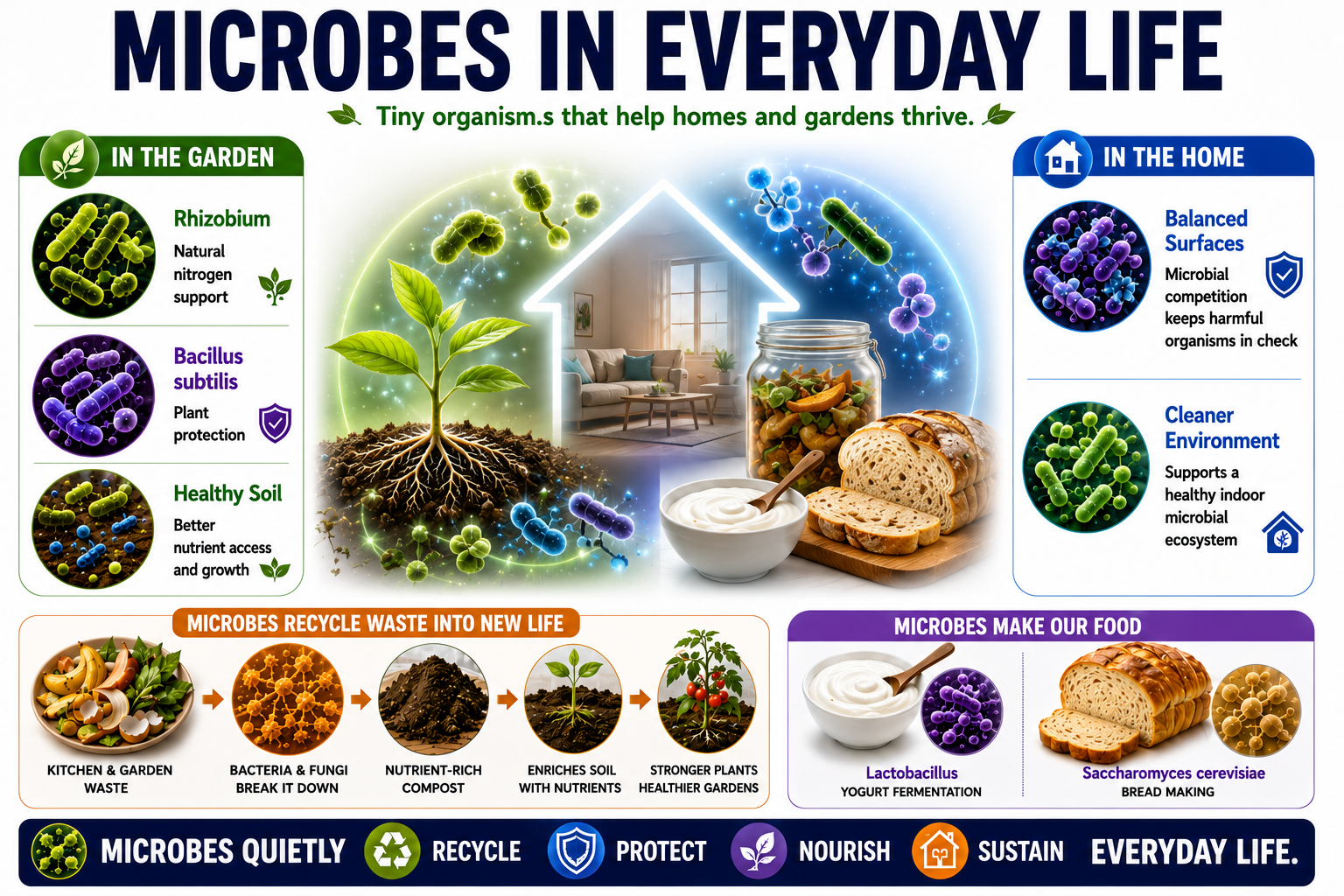
In home gardens, beneficial bacteria such as Rhizobium and Bacillus subtilis help improve soil quality and plant health. They make nutrients more accessible to roots and can help protect plants from certain diseases, reducing the need for chemical fertilizers and pesticides.
Composting is another everyday example of microbial activity. Bacteria and fungi break down kitchen scraps, dry leaves, and garden waste, converting them into nutrient-rich compost that can be returned to the soil.
Microbes also contribute to cleaner indoor environments. Certain harmless microbes compete with potentially harmful organisms on surfaces and in household dust, helping maintain a more balanced microbial ecosystem within the home.
Many foods consumed daily are products of microbial activity. Lactobacillus bacteria transform milk into yogurt, while Saccharomyces cerevisiae helps bread rise through fermentation. These processes have supported human societies for thousands of years.
Whether enriching soil, recycling waste, producing food, or helping maintain balanced indoor environments, microbes are woven into everyday life. Their contributions are often unseen, but they help make homes and gardens healthier, more productive, and more sustainable.
Microbes are nature's recyclers, gardeners, and food makers, quietly improving daily life.