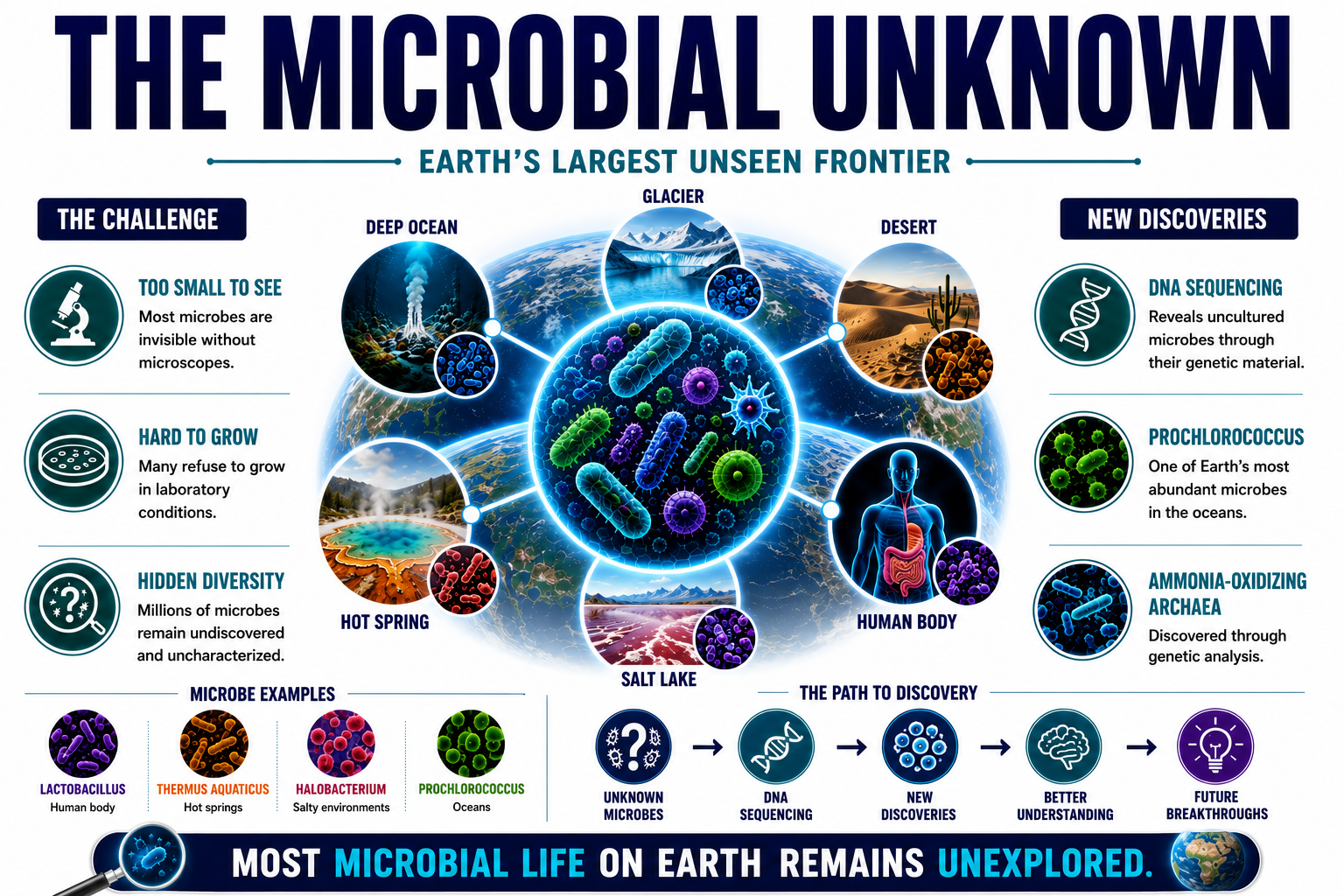
Microbes are found almost everywhere on Earth, from deep-sea hydrothermal vents to deserts, glaciers, and the human body. Yet much of the microbial world remains unexplored because most microbes are too small to observe directly and surprisingly difficult to study in the laboratory.
For many years, microbiologists could only study microbes that grew easily in culture dishes. While familiar organisms such as Escherichia coli, Bacillus subtilis, and Saccharomyces cerevisiae became important research models, countless other microbes refused to grow under laboratory conditions and remained largely invisible to science.
Modern DNA sequencing has revealed how much was being missed. Entire groups of bacteria and archaea have been discovered through their genetic material alone, without ever being cultured. Microbes such as the marine bacterium Prochlorococcus and ammonia-oxidizing archaea were found to be far more abundant and ecologically important than scientists once realized.
The challenge is compounded by the incredible diversity of microbial life. Some microbes, such as Lactobacillus, thrive in the human body, while others, including Thermus aquaticus, survive in hot springs, and Halobacterium species flourish in highly salty environments. Each habitat contains unique microbial communities that are still being explored.
Despite centuries of research, scientists have likely identified only a fraction of Earth's microbial diversity. Every new sequencing project continues to reveal previously unknown organisms, suggesting that much of the microbial world remains one of science's greatest unexplored frontiers.
Humanity has explored only a glimpse of the biological universe hidden within the microbial world.