Some microbial mutations have had consequences far beyond the microscopic world. By altering how microbes grow, spread, or respond to treatment, a single genetic change can influence medicine, public health, and even biotechnology.
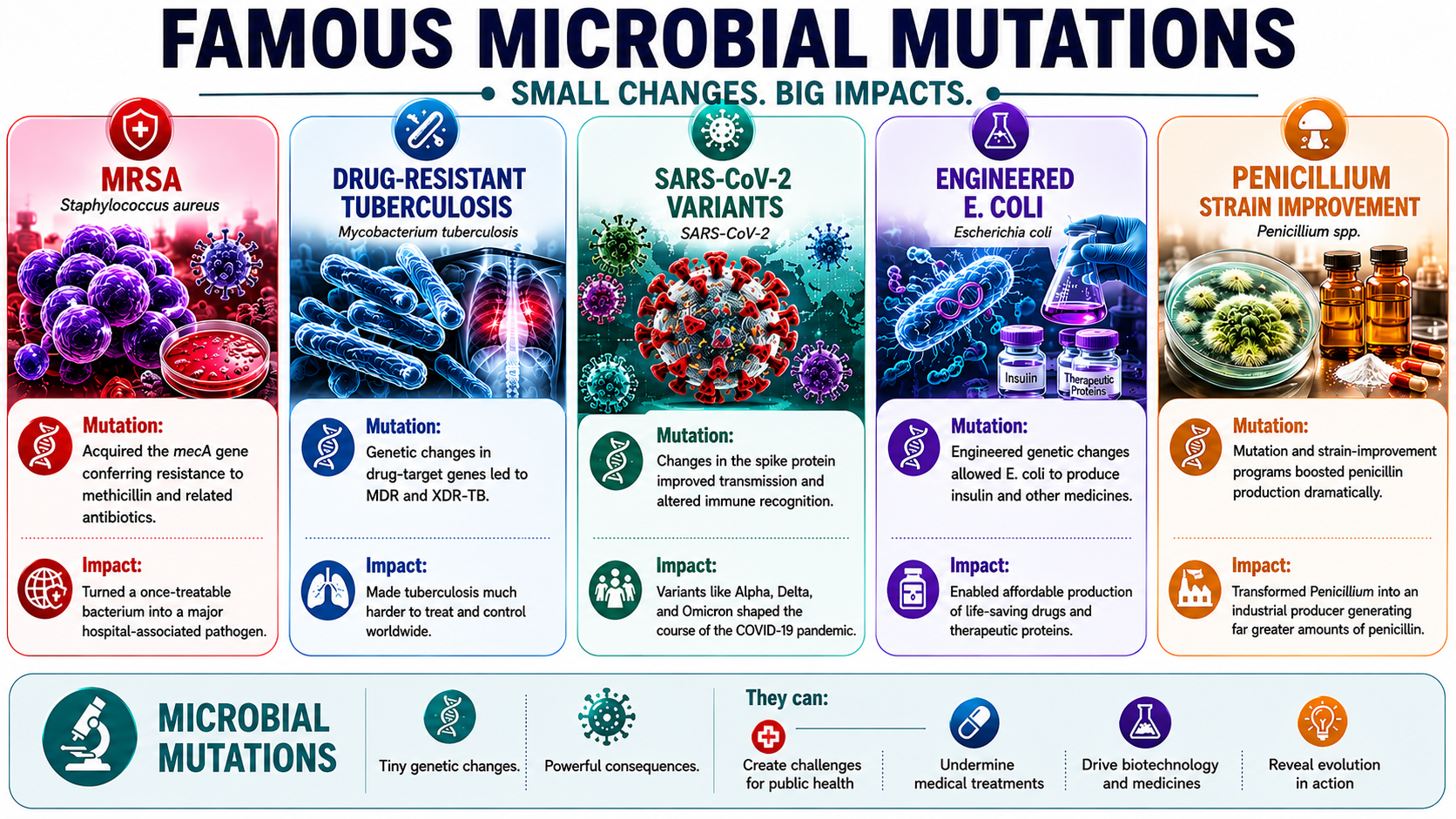
One of the most well-known examples is Methicillin-Resistant Staphylococcus aureus (MRSA). After acquiring the mecA gene, certain strains became resistant to methicillin and related antibiotics, transforming a once-treatable bacterium into a major hospital-associated pathogen.
Mutations have also made some diseases much harder to control. In Mycobacterium tuberculosis, genetic changes affecting drug-target genes led to multidrug-resistant and extensively drug-resistant forms of tuberculosis, creating serious challenges for treatment programs worldwide.
Viruses evolve rapidly as well. Mutations in the spike protein of SARS-CoV-2 improved transmission and, in some cases, altered immune recognition. Variants such as Alpha, Delta, and Omicron played major roles in shaping the course of the COVID-19 pandemic.
Not all famous microbial mutations have been harmful. In biotechnology, engineered strains of Escherichia coli have been modified to produce insulin, therapeutic proteins, and other valuable medicines. Similarly, mutation and strain-improvement programs transformed Penicillium into an industrial producer capable of generating far greater amounts of penicillin than the original strains discovered in the 1920s.
These examples illustrate two sides of microbial evolution. Some mutations create major public health challenges, while others become powerful tools that help drive modern medicine and biotechnology.
Some of the most consequential events in modern medicine began with a mutation invisible to the human eye.