Many of the world's most familiar foods exist because of microbes. For thousands of years, bacteria, yeasts, and fungi have been used to transform raw ingredients into products with improved taste, texture, shelf life, and nutritional value.
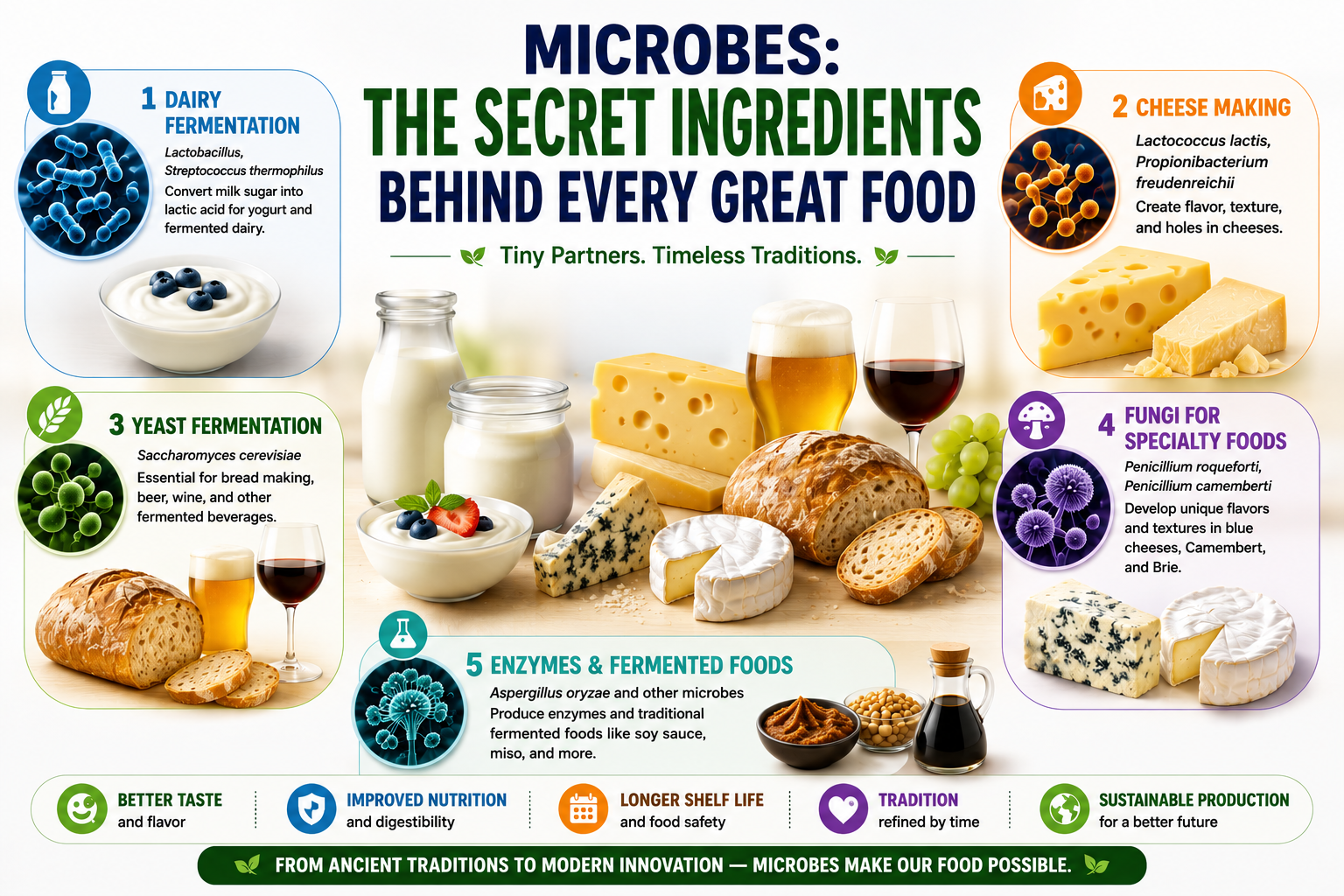
One of the most important applications is dairy fermentation. Lactobacillus and Streptococcus thermophilus convert milk sugars into lactic acid, a process used to produce yogurt and many fermented dairy products. Cheese production also relies on microbes such as Lactococcus lactis and Propionibacterium freudenreichii, which contribute to flavor, texture, and characteristic holes in Swiss-type cheeses.
Yeasts play an equally important role in food production. Saccharomyces cerevisiae, commonly known as baker's yeast, is responsible for bread making and is also widely used in the production of beer, wine, and other fermented beverages.
Certain fungi are valued for their ability to create distinctive foods. Penicillium roqueforti and Penicillium camemberti are used in the production of blue cheeses, Camembert, and Brie, where they help develop unique flavors and textures.
Microbes are also used beyond fermentation. Species such as Aspergillus oryzae are essential for producing soy sauce, miso, and other traditional fermented foods, while microbial enzymes are widely used in food processing and dairy manufacturing.
From yogurt and cheese to bread, beverages, and fermented foods, microbes have become indispensable partners in the food industry. Many products found in supermarkets today are the result of carefully managed microbial activity that has been refined over centuries.
Behind every loaf of risen bread, aged cheese, and cup of yogurt is a story of microbial transformation.