When most people think about water purification, they think about filters, chemicals, or treatment plants. Yet some of the most important work is performed by microbes that naturally remove pollutants and improve water quality.
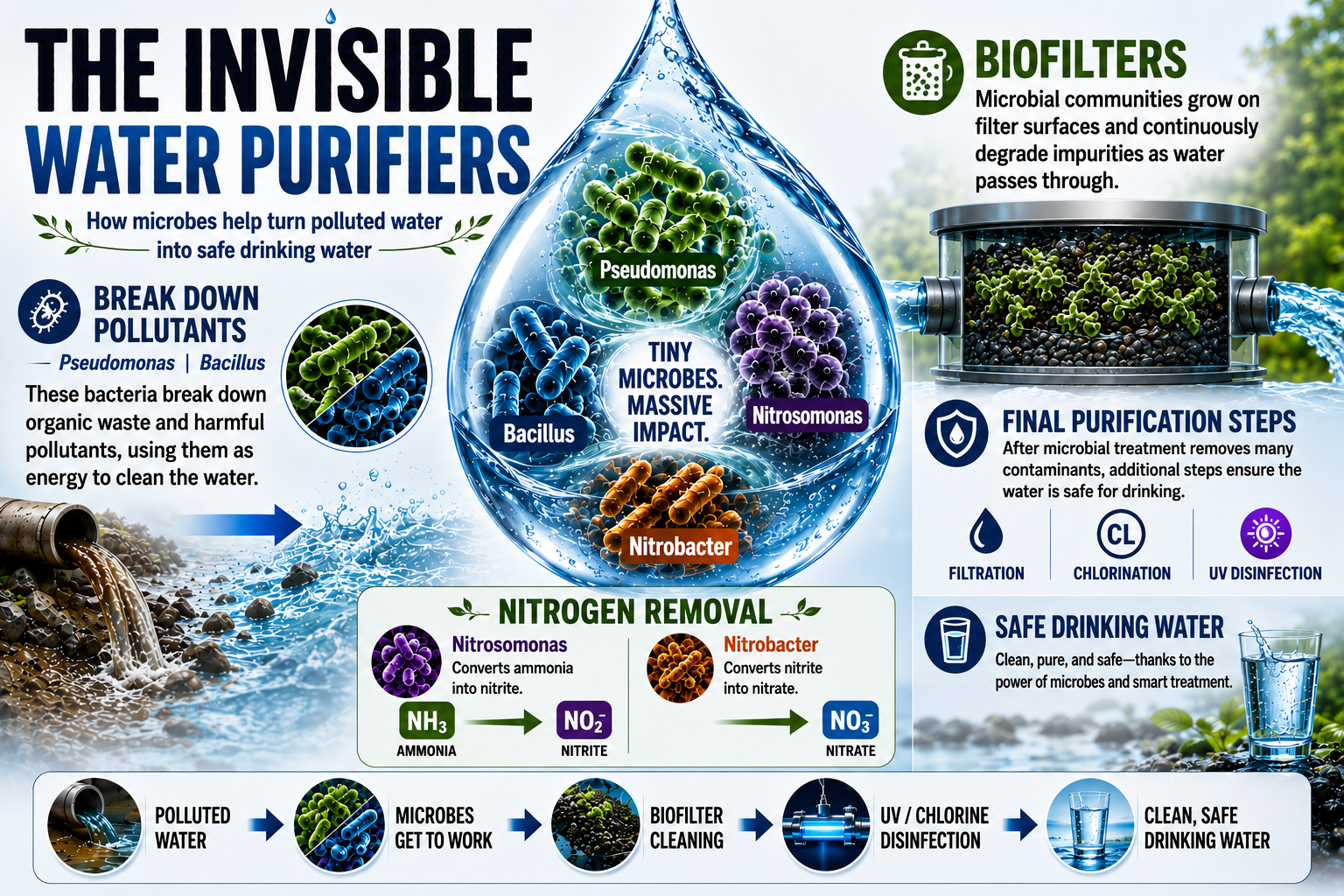
In biological water treatment systems, bacteria such as Pseudomonas, Bacillus, and Nitrosomonas break down organic waste and contaminants that enter water supplies. These microbes use many pollutants as sources of energy, helping to clean the water in the process.
Other bacteria play a key role in the nitrogen cycle. Nitrosomonas converts ammonia into nitrite, while Nitrobacter converts nitrite into nitrate. These reactions help remove potentially harmful nitrogen compounds from water.
Microbes are also used in biofilters, where communities of bacteria grow on filter surfaces and continuously degrade impurities as water passes through. Such systems are widely used in water and wastewater treatment facilities around the world.
After microbial treatment removes many contaminants, additional steps such as filtration, chlorination, ozone treatment, or ultraviolet disinfection are used to eliminate harmful pathogens and make the water safe for drinking.
Rather than being merely contaminants, microbes are essential partners in modern water purification. Many drinking water systems depend on carefully managed microbial communities to help transform polluted water into a cleaner and safer resource.
The journey from polluted water to safe drinking water often passes through a microbial ecosystem