
Some of the most promising solutions to environmental and climate challenges are being developed with the help of microbes. These organisms naturally drive many of Earth's carbon, nitrogen, and nutrient cycles, making them valuable tools for building more sustainable systems.
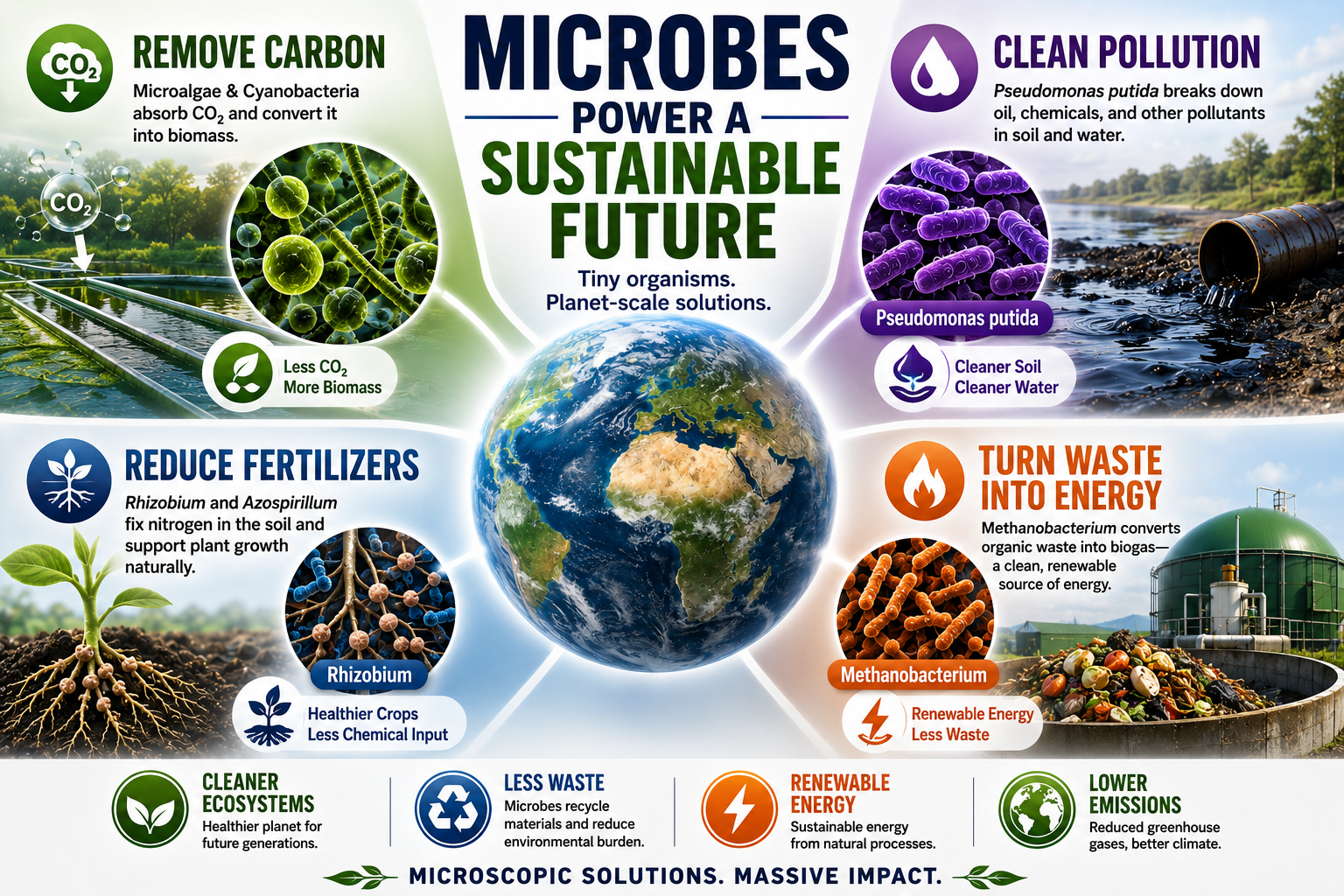
One important application involves carbon capture. Photosynthetic microbes such as cyanobacteria and microalgae absorb carbon dioxide from the atmosphere and convert it into biomass, helping remove greenhouse gases while producing useful products such as biofuels and biochemicals.
Microbes are also being used to clean polluted environments. Bacteria such as Pseudomonas putida can break down oil, industrial chemicals, and other contaminants, making them valuable for bioremediation of contaminated soil and water.
In agriculture, nitrogen-fixing bacteria such as Rhizobium and Azospirillum reduce the need for synthetic fertilizers by supplying plants with usable nitrogen. This can lower energy consumption and reduce environmental impacts associated with fertilizer production.
Another growing area is renewable energy. Methane-producing archaea, including Methanobacterium species, help convert agricultural waste, food waste, and sewage into biogas, providing a renewable source of energy while reducing waste disposal problems.
From capturing carbon and producing renewable fuels to improving agriculture and cleaning polluted environments, microbes are becoming essential tools in the transition toward a more sustainable future. Many climate and environmental solutions may ultimately depend on harnessing the capabilities of these microscopic organisms.
Microbes helped create the world we inherited—and they may help save the world we are changing.