
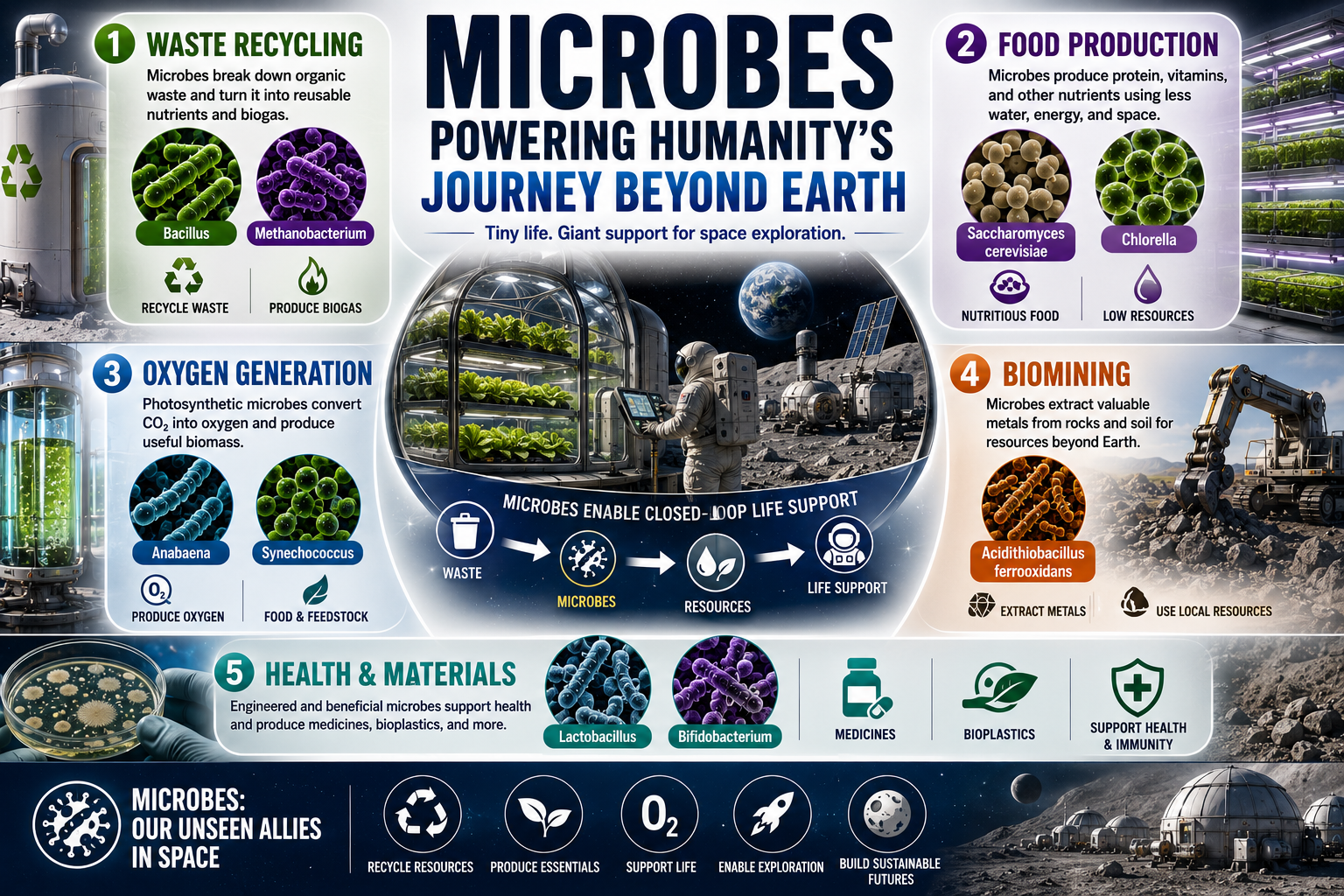
Future space missions will require far more than rockets and spacecraft. To support humans on long journeys and in permanent settlements beyond Earth, scientists are exploring how microbes can help recycle resources, produce essential supplies, and maintain life-support systems.
One of the most important applications is waste recycling. Microbes such as Bacillus and methane-producing archaea including Methanobacterium can break down organic waste and convert it into reusable nutrients and biogas, helping create closed-loop systems that minimize resource loss.
Microbes may also contribute to food production. Yeasts such as Saccharomyces cerevisiae and edible microalgae like Chlorella can produce proteins, vitamins, and other nutrients using relatively small amounts of water, energy, and raw materials.
Oxygen generation is another promising application. Photosynthetic cyanobacteria such as Anabaena and Synechococcus can convert carbon dioxide into oxygen while producing biomass that could potentially be used as food or industrial feedstock.
Researchers are also investigating microbial biomining. Species such as Acidithiobacillus ferrooxidans can extract useful metals from rocks and may one day help astronauts obtain resources from lunar or Martian soil.
Engineered microbes could further support space settlements by producing medicines, bioplastics, and other materials on demand. At the same time, maintaining healthy populations of beneficial microbes such as Lactobacillus and Bifidobacterium may help support astronaut digestion, immunity, and overall health during long missions.
Rather than carrying every resource from Earth, future explorers may rely on carefully managed microbial ecosystems that recycle waste, generate supplies, and help make long-term human presence beyond Earth possible.
Microbes transformed one planet into a living world; they may help humans thrive on the next.