
There is no single accepted figure for the total economic value of microbes because their contributions are spread across medicine, agriculture, food production, industry, environmental services, and ecosystem processes. Many of their most important benefits are indirect and difficult to measure in monetary terms.
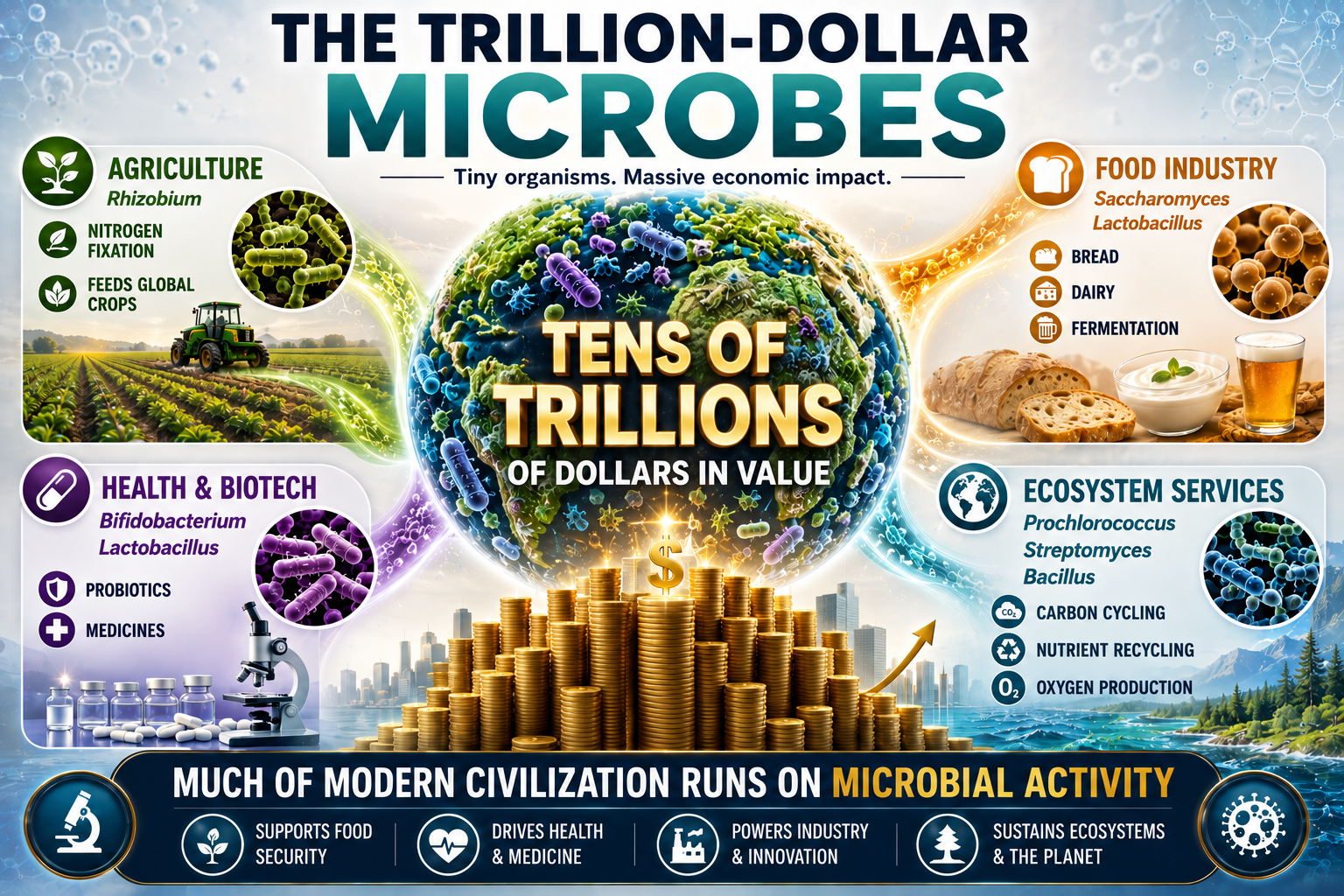
However, scientists and economists agree that microbial activities underpin a substantial portion of the global economy. Microbes such as Rhizobium help support agricultural productivity through nitrogen fixation, while Saccharomyces cerevisiae drives industries worth billions of dollars through bread, beer, wine, and biotechnology production. Other microbes, including Lactobacillus and Bifidobacterium, contribute to food, health, and probiotic industries worldwide.
The economic impact becomes even larger when ecosystem services are considered. Marine microbes such as Prochlorococcus help drive global carbon cycling and oxygen production, while decomposers such as Streptomyces and Bacillus recycle nutrients that sustain terrestrial ecosystems. These services support agriculture, fisheries, forestry, and many other sectors.
Some researchers have attempted to estimate the value of specific microbial groups. A recent study estimated that fungi alone contribute approximately trillion dollars to the global economy through their roles in food production, medicines, ecosystem services, and industrial applications.
Although no comprehensive valuation exists for all microbes combined, their true economic contribution is almost certainly measured in tens of trillions of dollars annually. Much of modern civilization, from food and medicine to agriculture and environmental stability, depends on microbial processes that operate largely out of sight.
Some of the most valuable contributors to the global economy are invisible microbes working behind the scenes.