
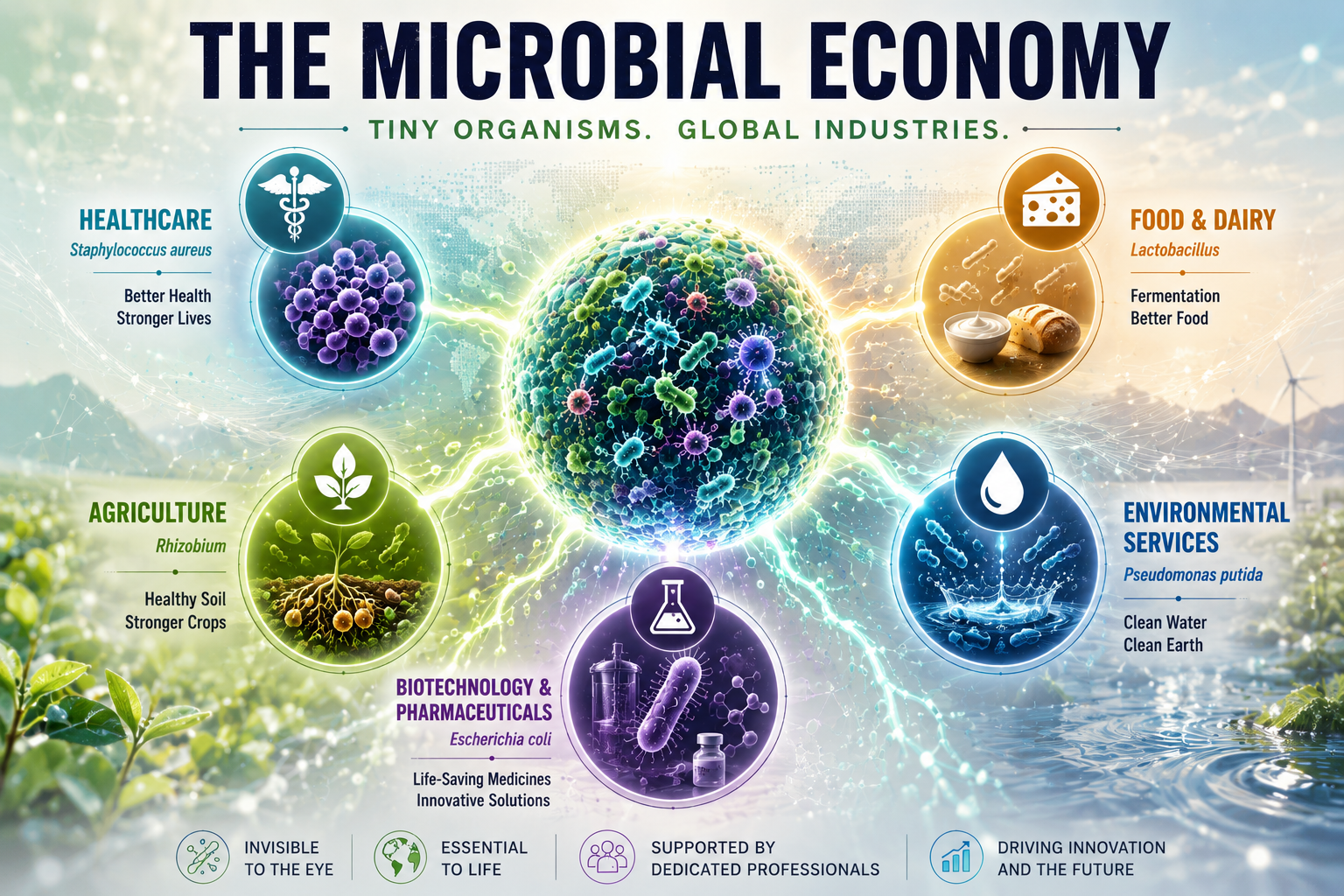
Microbes are studied and used by a surprisingly wide range of professions. From hospitals and food factories to farms and biotechnology companies, many industries depend on microorganisms and the people who work with them.
Microbiologists and medical researchers investigate microbes such as Staphylococcus aureus, Mycobacterium tuberculosis, and influenza viruses to better understand disease, develop treatments, and improve public health. Clinical laboratory scientists also work with microbes to diagnose infections and guide patient care.
In the food and dairy industry, specialists use organisms such as Lactobacillus, Streptococcus thermophilus, and Saccharomyces cerevisiae to produce yogurt, cheese, bread, and fermented beverages. These microbes are essential to many food manufacturing processes.
Agricultural scientists work with microbes such as Rhizobium, Azospirillum, and Trichoderma harzianum to improve soil fertility, promote plant growth, and protect crops from disease. Environmental professionals use bacteria such as Pseudomonas putida and Bacillus species to help treat wastewater and clean polluted environments.
Microbes are also central to the biotechnology and pharmaceutical industries. Organisms such as Escherichia coli and Saccharomyces cerevisiae are used to manufacture insulin, vaccines, enzymes, and many other products that support modern medicine and industry.
Whether producing food, developing medicines, protecting crops, or treating waste, professionals across many sectors rely on microbes every day. As biotechnology continues to expand, careers involving microorganisms are becoming increasingly important to the global economy.
Microbes may be invisible, but they help drive some of the largest industries and most important careers on Earth.