Some of the most important events in Earth's history were driven not by plants or animals, but by microbes. Long before complex life evolved, microorganisms were already reshaping the planet.
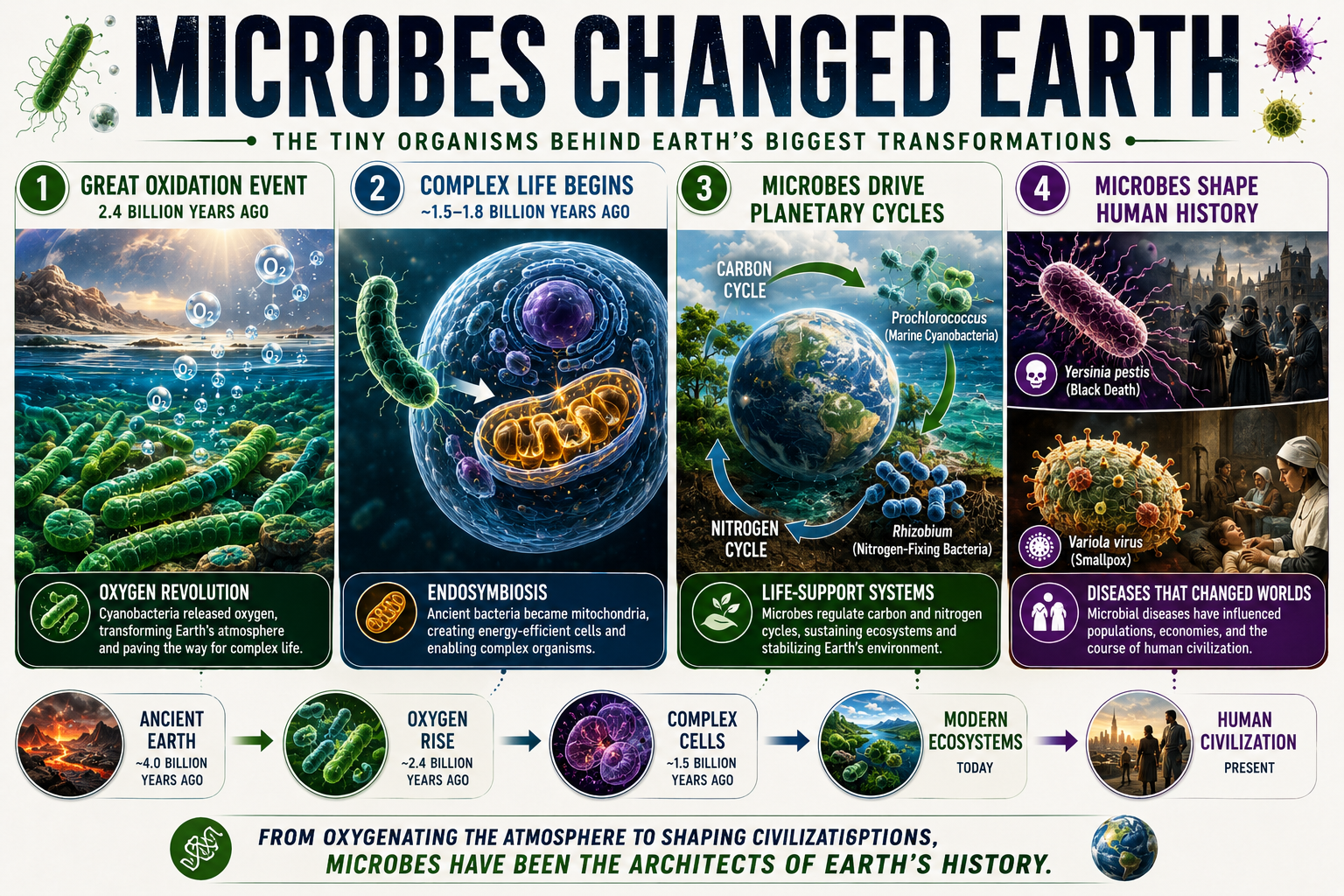
One of the most significant examples was the Great Oxidation Event, which occurred about 2.4 billion years ago. Photosynthetic cyanobacteria began releasing oxygen as a byproduct of photosynthesis, gradually transforming Earth's atmosphere from oxygen-poor to oxygen-rich. This change paved the way for the evolution of complex life.
Microbes also played a key role in the origin of complex cells. Scientists believe that mitochondria, the energy-producing structures found in plants, animals, and fungi, evolved from ancient bacteria that entered into a long-term partnership with another cell. This event helped give rise to all complex life on Earth.
Throughout Earth's history, microbes have continued to regulate major planetary cycles. Nitrogen-fixing bacteria such as Rhizobium and marine microbes such as Prochlorococcus help drive the nitrogen and carbon cycles that support modern ecosystems.
Microbes have influenced human history as well. Disease-causing organisms such as Yersinia pestis, which caused the Black Death, and Variola virus, the cause of smallpox, altered populations, economies, and societies on a global scale.
From oxygenating the atmosphere to enabling the evolution of complex organisms, microbes have repeatedly changed the course of Earth's history. Many of the conditions that make our planet habitable today can be traced back to the activities of microscopic life.
Microbes did not simply inhabit Earth—they helped build the conditions that made complex life possible.