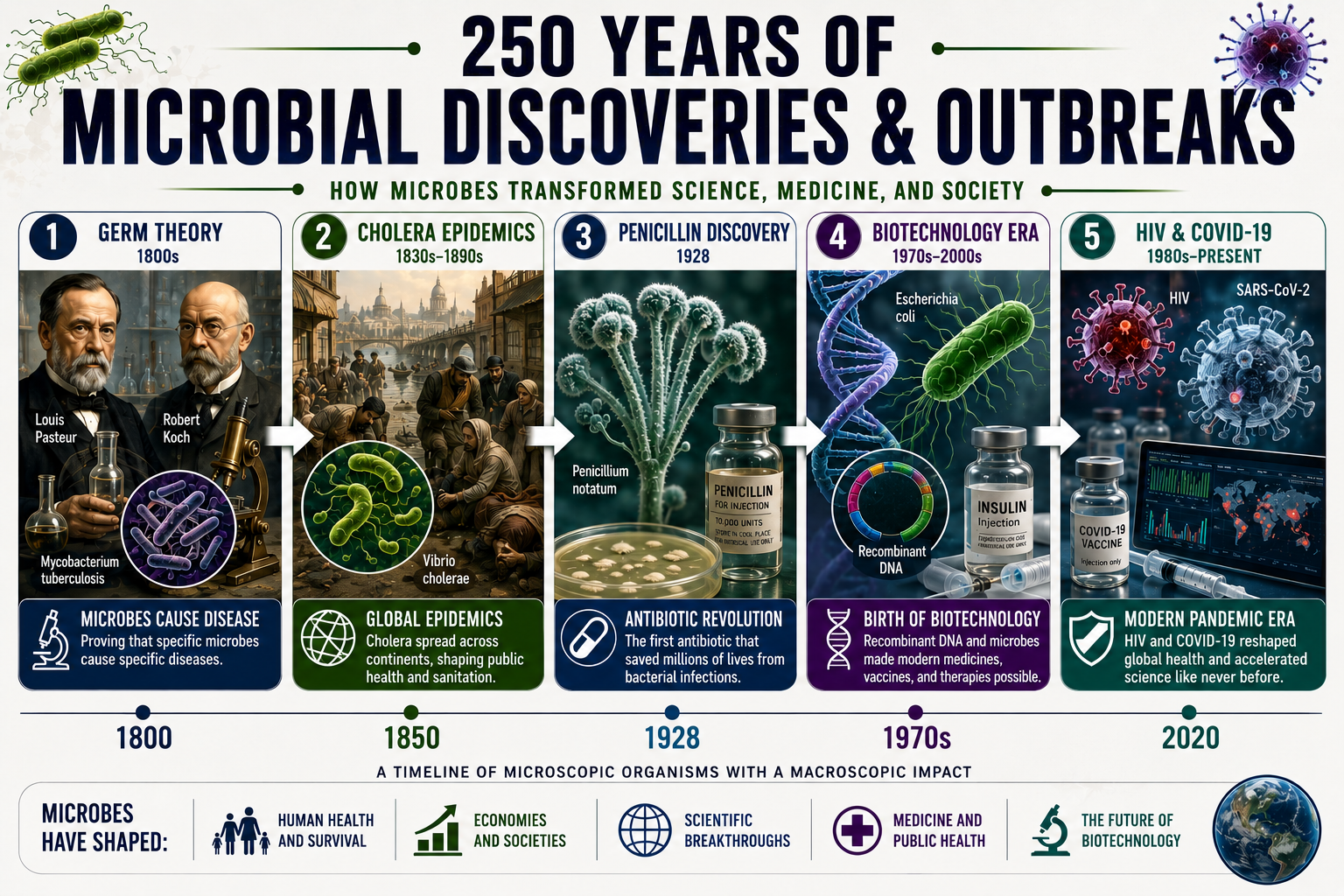
The past 250 years have transformed humanity's understanding of microbes. During this period, microorganisms were discovered, linked to disease, harnessed for medicine, and recognized as major forces shaping human history.
One of the most important milestones came in the late nineteenth century when Louis Pasteur and Robert Koch helped establish the germ theory of disease. Koch's identification of Mycobacterium tuberculosis and other pathogens provided convincing evidence that specific microbes could cause specific diseases.
Several outbreaks profoundly affected human societies. Cholera epidemics caused by Vibrio cholerae spread across multiple continents during the nineteenth century, while the influenza pandemic of 1918 demonstrated how rapidly infectious diseases could spread through a connected world.
The discovery of penicillin in 1928 marked another turning point. Penicillium fungi led to the first widely successful antibiotic, revolutionizing medicine and saving millions of lives from bacterial infections.
More recently, the emergence of HIV, caused by the Human Immunodeficiency Virus (HIV), reshaped public health and biomedical research. The COVID-19 pandemic, caused by SARS-CoV-2, became one of the most significant global outbreaks of the modern era and accelerated advances in diagnostics, vaccines, and genomic surveillance.
Microbial discoveries have not been limited to disease. The development of recombinant DNA technology using Escherichia coli transformed biotechnology, enabling the production of insulin, therapeutic proteins, and many modern biological medicines.
From germ theory and antibiotics to pandemics and biotechnology, microbes have repeatedly altered the course of science, medicine, and society. Many of the defining events of the modern world have involved organisms too small to be seen with the naked eye.
From pandemics to penicillin, microbes have been among the most influential forces shaping the modern world.