
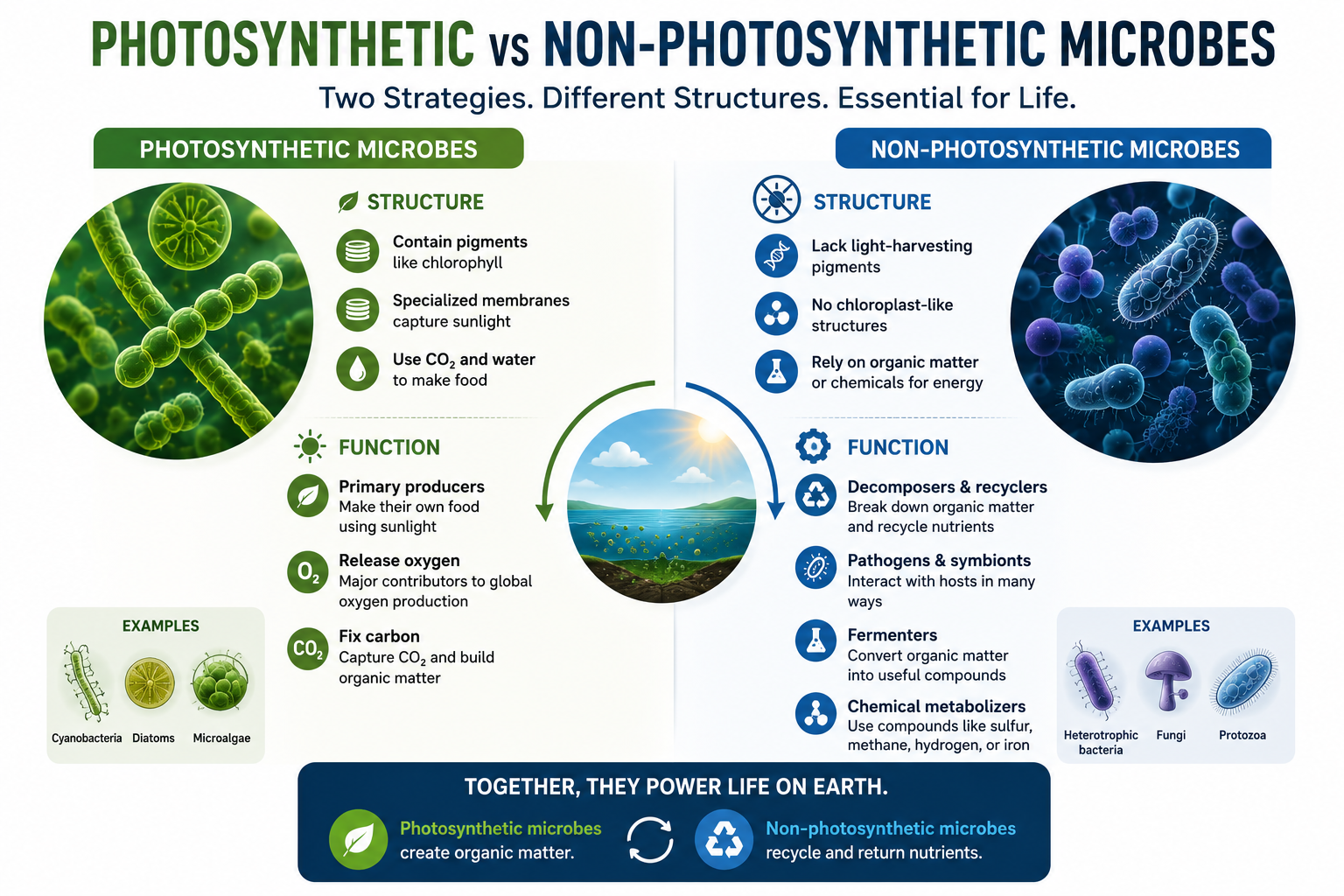
Photosynthetic microbes are built to capture and convert light energy, while non-photosynthetic microbes rely on organic matter or chemical reactions for survival. This difference shapes both their internal structures and their ecological roles.
Photosynthetic microbes such as cyanobacteria, diatoms, and microalgae contain pigments like chlorophyll and specialized membranes or chloroplast-like structures that absorb sunlight. Using carbon dioxide and water, they produce organic compounds through photosynthesis and often release oxygen as a byproduct.
Non-photosynthetic microbes lack these light-harvesting systems. Instead, they obtain energy by decomposing organic material, absorbing dissolved nutrients, consuming other organisms, or carrying out chemical reactions involving compounds such as sulfur, methane, hydrogen, or iron.
Functionally, photosynthetic microbes act as primary producers. In oceans and freshwater systems, they form the base of many food chains and contribute significantly to global oxygen production and carbon fixation.
Non-photosynthetic microbes perform very different ecological tasks. Many function as decomposers, recyclers, pathogens, symbionts, fermenters, or chemical metabolizers. They help break down dead organic matter, recycle nutrients, regulate greenhouse gases, and maintain soil and aquatic chemistry.
In most ecosystems, both groups are tightly interconnected. Photosynthetic microbes generate organic biomass, while non-photosynthetic microbes recycle and redistribute those nutrients back into the environment.
Photosynthetic microbes function primarily as producers, while non-photosynthetic microbes often act as decomposers, recyclers, or chemical metabolizers.