
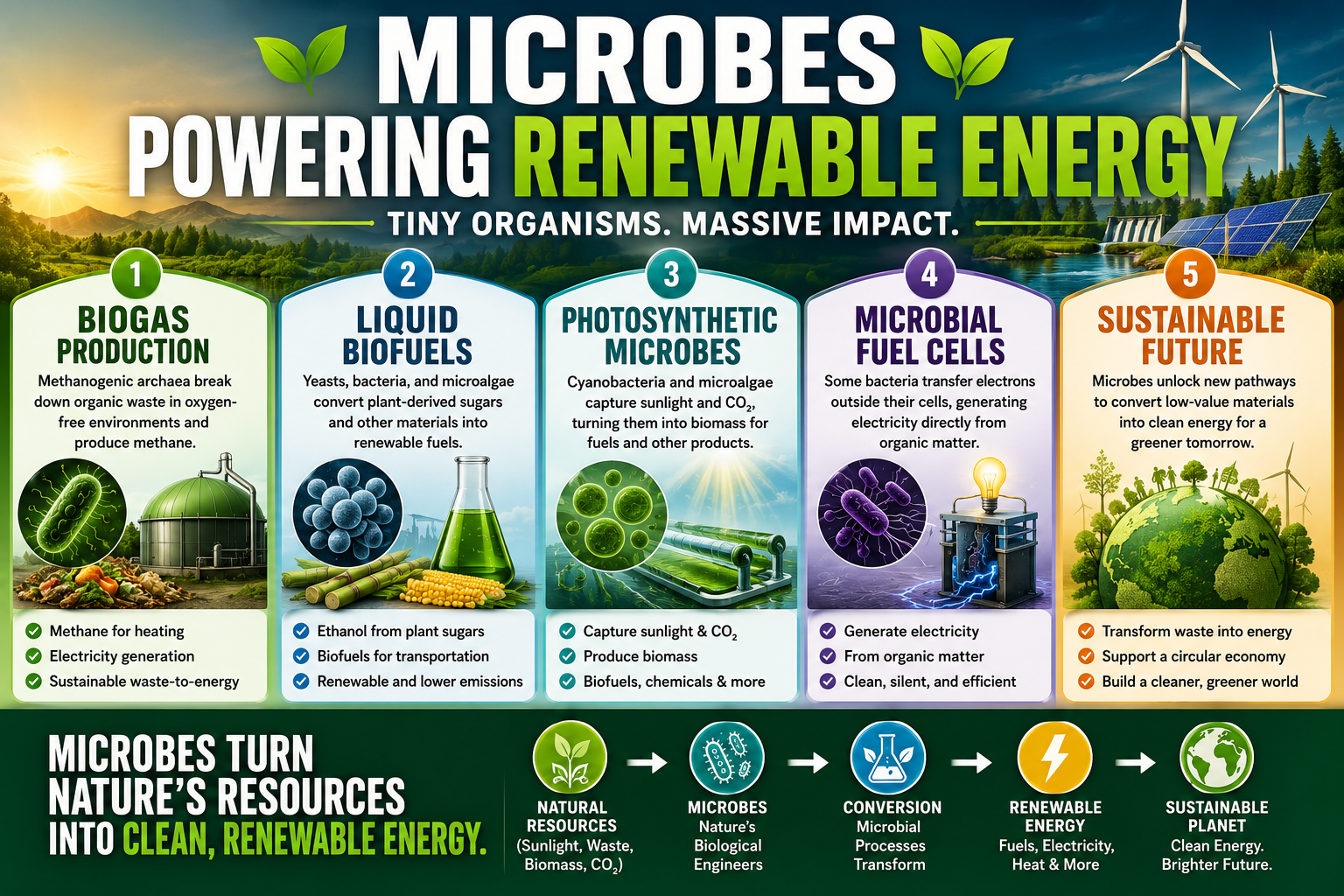
Microbes are becoming increasingly important in the search for renewable and sustainable energy. By converting sunlight, organic waste, and other natural resources into useful fuels, they offer alternatives to fossil-fuel-based energy production.
One of the most established applications is biogas production. Methanogenic archaea such as Methanobacterium break down organic waste in oxygen-free environments and produce methane, which can be used for heating, electricity generation, and other energy needs.
Microbes are also being used to produce liquid biofuels. Yeasts such as Saccharomyces cerevisiae ferment plant-derived sugars into ethanol, while certain bacteria and microalgae can generate compounds that may serve as renewable fuels for transportation.
Photosynthetic microbes contribute in a different way. Cyanobacteria and microalgae such as Chlorella capture sunlight and carbon dioxide, converting them into biomass that can be processed into biofuels, chemicals, and other energy-related products.
Researchers are exploring even more advanced technologies. Some bacteria can transfer electrons outside their cells, creating the possibility of microbial fuel cells that generate electricity directly from organic matter.
Although renewable energy currently relies heavily on solar, wind, and hydropower technologies, microbes provide unique biological pathways for producing fuels and recovering energy from waste. Their ability to transform low-value materials into useful energy resources makes them an increasingly valuable part of the renewable energy landscape.
A pile of food waste may look useless to us, but to microbes it's fuel waiting to be transformed into energy.