
One of the biggest challenges in renewable energy is not generating electricity but storing it for use when the sun is not shining or the wind is not blowing. Researchers are increasingly exploring microbes as a way to convert excess energy into stable chemical forms that can be stored and used later.
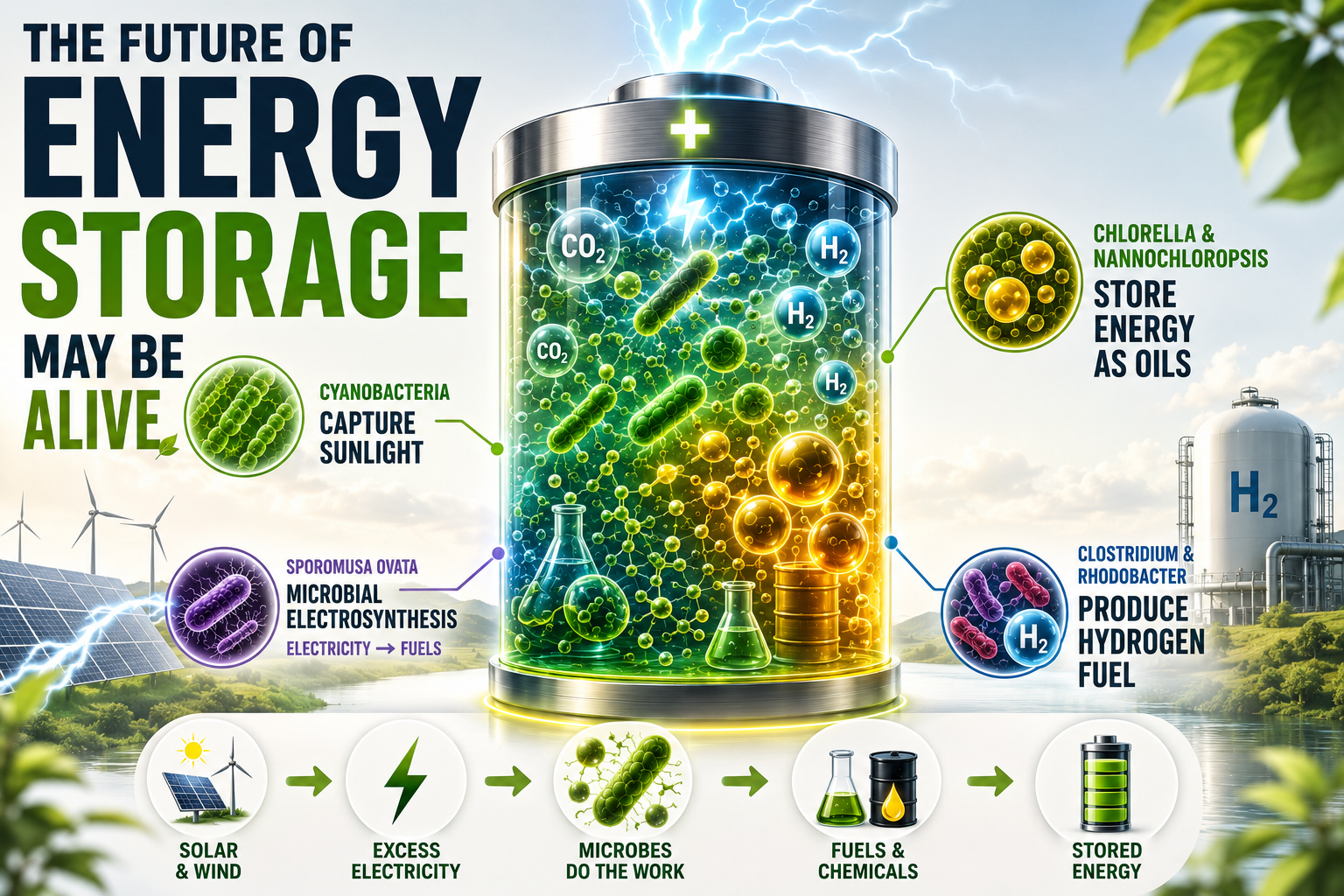
Some microbes naturally produce energy-rich compounds that function as biological energy stores. For example, cyanobacteria and other photosynthetic microbes can use sunlight to convert carbon dioxide into organic molecules that store chemical energy.
Certain bacteria can also generate hydrogen, a fuel that can be stored and later used to produce electricity. Species such as Clostridium and Rhodobacter have attracted attention because of their ability to produce hydrogen through microbial metabolism.
Another promising area involves microbial electrosynthesis. Bacteria such as Sporomusa ovata can use electricity and carbon dioxide to produce organic compounds, effectively converting electrical energy into chemical energy that can be stored and transported.
Researchers are also investigating microbes that accumulate large amounts of oils and other energy-rich molecules. Microalgae such as Chlorella and Nannochloropsis can store substantial quantities of lipids, making them potential biological reservoirs of renewable energy.
Although these technologies are still developing, they offer a different approach to energy storage. Rather than relying entirely on batteries and physical infrastructure, future systems may use microbial processes to convert surplus renewable energy into fuels, chemicals, and other stable forms of stored energy.
Instead of storing energy in metal batteries, future technologies may store it in biological molecules made by microbes.