
Transportation depends heavily on fossil fuels, making it one of the largest sources of greenhouse gas emissions. Microbes are helping researchers develop cleaner alternatives by producing renewable fuels, sustainable materials, and new technologies that can reduce the environmental impact of mobility systems.
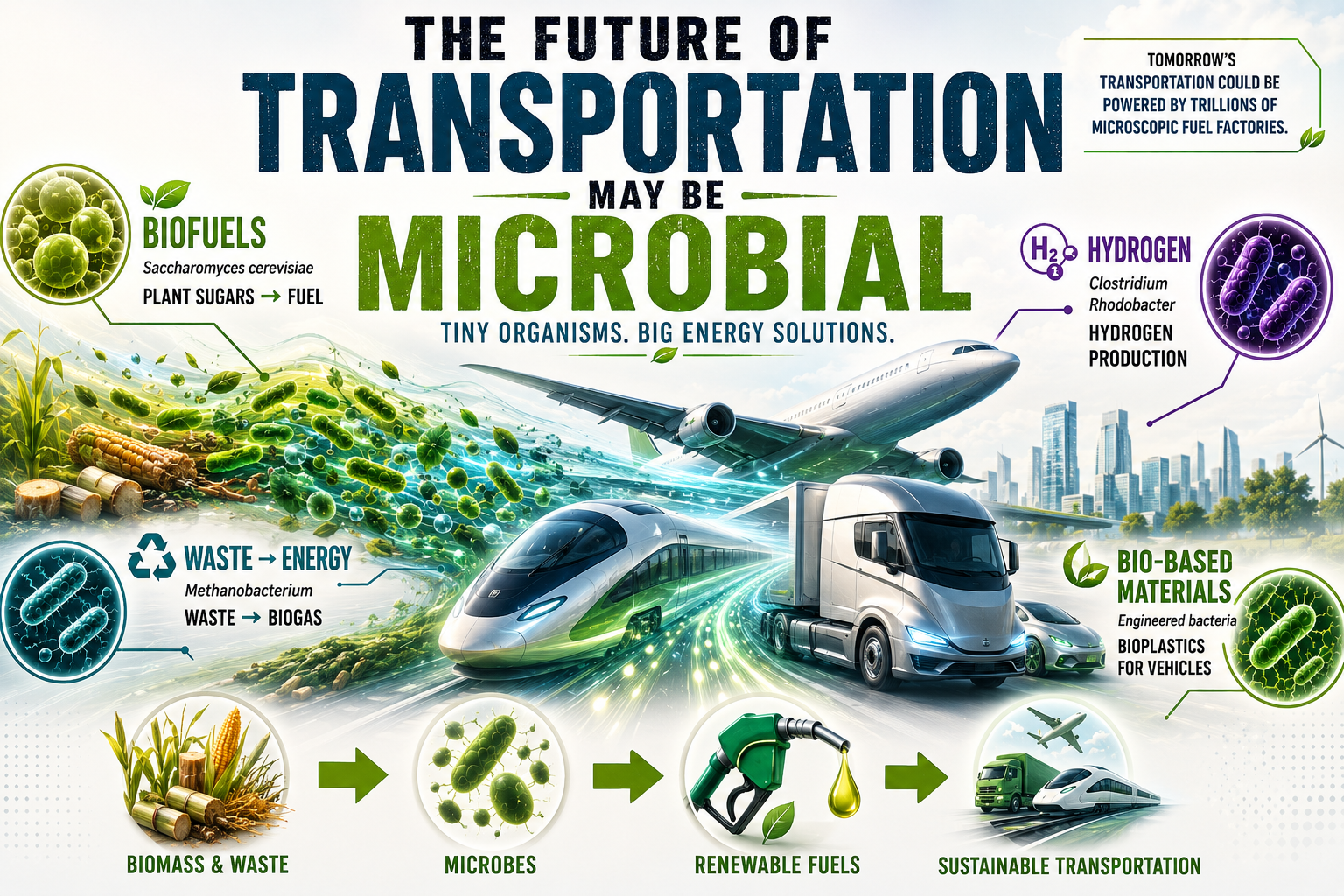
One of the most important applications is biofuel production. Yeasts such as Saccharomyces cerevisiae convert plant sugars into ethanol, while certain bacteria and microalgae can produce compounds that may serve as renewable substitutes for gasoline, diesel, and aviation fuels.
Microbes can also help turn waste into energy. Methanogenic archaea such as Methanobacterium convert agricultural waste, food waste, and sewage into biogas, providing a renewable fuel source that can be used for transportation and electricity generation.
Beyond fuels, microbes are being used to manufacture sustainable materials. Engineered bacteria can produce bioplastics and other bio-based compounds that may reduce dependence on petroleum-derived materials used in vehicles and transportation infrastructure.
Researchers are also exploring microbial production of hydrogen. Organisms such as Clostridium and Rhodobacter can generate hydrogen through biological processes, offering potential routes toward low-carbon fuel systems for future transportation.
While electric vehicles, batteries, and renewable electricity will play major roles in sustainable mobility, microbes provide complementary solutions that can supply renewable fuels, utilize waste streams, and support the transition away from fossil resources. Their ability to convert biological materials into valuable energy products makes them an important part of the future transportation landscape.
Tomorrow's transportation systems could be powered partly by trillions of microorganisms working as microscopic fuel factories.