Microbial diversity is found almost everywhere on Earth, but some environments contain far greater numbers of species than others. These ecosystems provide a wide variety of nutrients, habitats, and environmental conditions that allow many microbes to coexist.
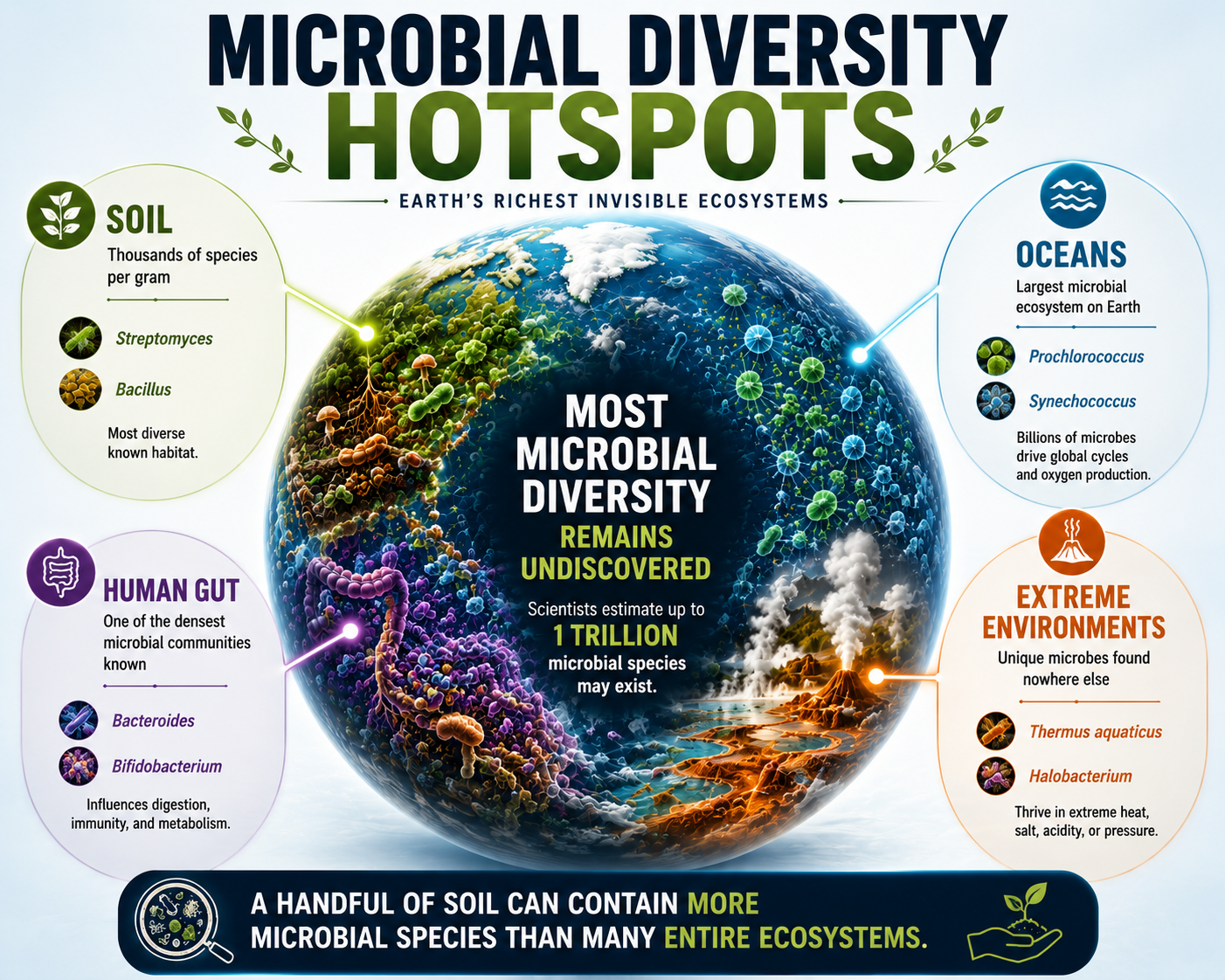
Soils are among the richest microbial habitats known. A single gram of soil can contain thousands of microbial species, including bacteria such as Streptomyces, Bacillus, and numerous fungi that help recycle nutrients and support plant growth.
The human gut is another hotspot of diversity. Communities containing Bacteroides, Faecalibacterium prausnitzii, Bifidobacterium, and many other microbes form complex ecosystems that influence digestion, immunity, and metabolism.
Oceans contain enormous microbial diversity as well. Surface waters are dominated by organisms such as Prochlorococcus and Synechococcus, while deeper regions host entirely different communities adapted to darkness, pressure, and limited nutrients.
Extreme environments can also harbor unique microbes. Hot springs contain organisms such as Thermus aquaticus, while highly saline lakes support microbes such as Halobacterium. Although these habitats may contain fewer species, many of their microbes are found nowhere else on Earth.
From tropical soils and coral reefs to oceans and the human body, microbial diversity flourishes wherever energy, nutrients, and ecological opportunities are available. Much of this diversity remains undiscovered, making these ecosystems some of the most important frontiers in microbiology.
From ocean depths to the human intestine, microbial ecosystems represent some of the planet's most complex biological communities.