
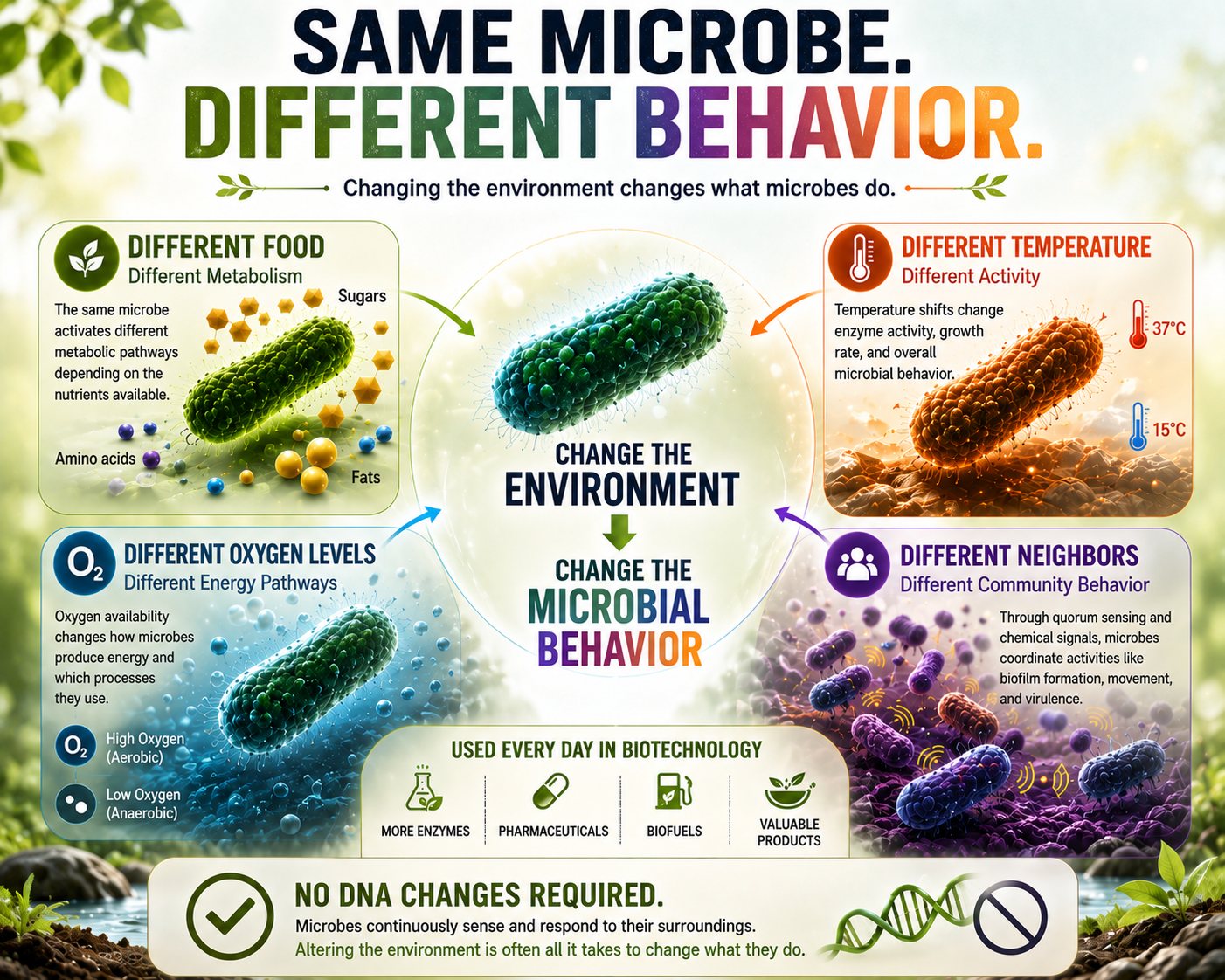
Yes. Microbial behavior can often be changed without altering the organism's DNA. Like other living organisms, microbes respond continuously to changes in their environment, nutrient availability, and interactions with other species.
One of the simplest examples is nutrition. Organisms such as Escherichia coli and Saccharomyces cerevisiae can activate different metabolic pathways depending on the nutrients available, allowing them to produce different compounds under different conditions.
Microbial behavior can also be influenced by environmental factors such as temperature, oxygen levels, pH, and light. Cyanobacteria, for example, adjust their activity in response to changes in sunlight, while many bacteria alter their metabolism when oxygen becomes scarce.
Interactions between microbes can change behavior as well. Through chemical signaling systems such as quorum sensing, bacteria including Pseudomonas aeruginosa can modify biofilm formation, movement, and other activities based on the presence of neighboring cells.
Scientists routinely use these responses in biotechnology. By changing growth conditions rather than genes, they can encourage microbes to produce more enzymes, pharmaceuticals, biofuels, or other valuable products.
In many cases, altering a microbe's environment is enough to change what it does. Genetic modification is a powerful tool, but it is only one of many ways microbial behavior can be guided and controlled.
A microbe's DNA defines its possibilities, but its environment often determines which of those possibilities become reality.