Many of Earth's ecosystems depend on microbes. They recycle nutrients, support plant growth, and help regulate natural cycles. However, some microbes can also damage ecosystems, harm wildlife, or contribute to environmental problems.
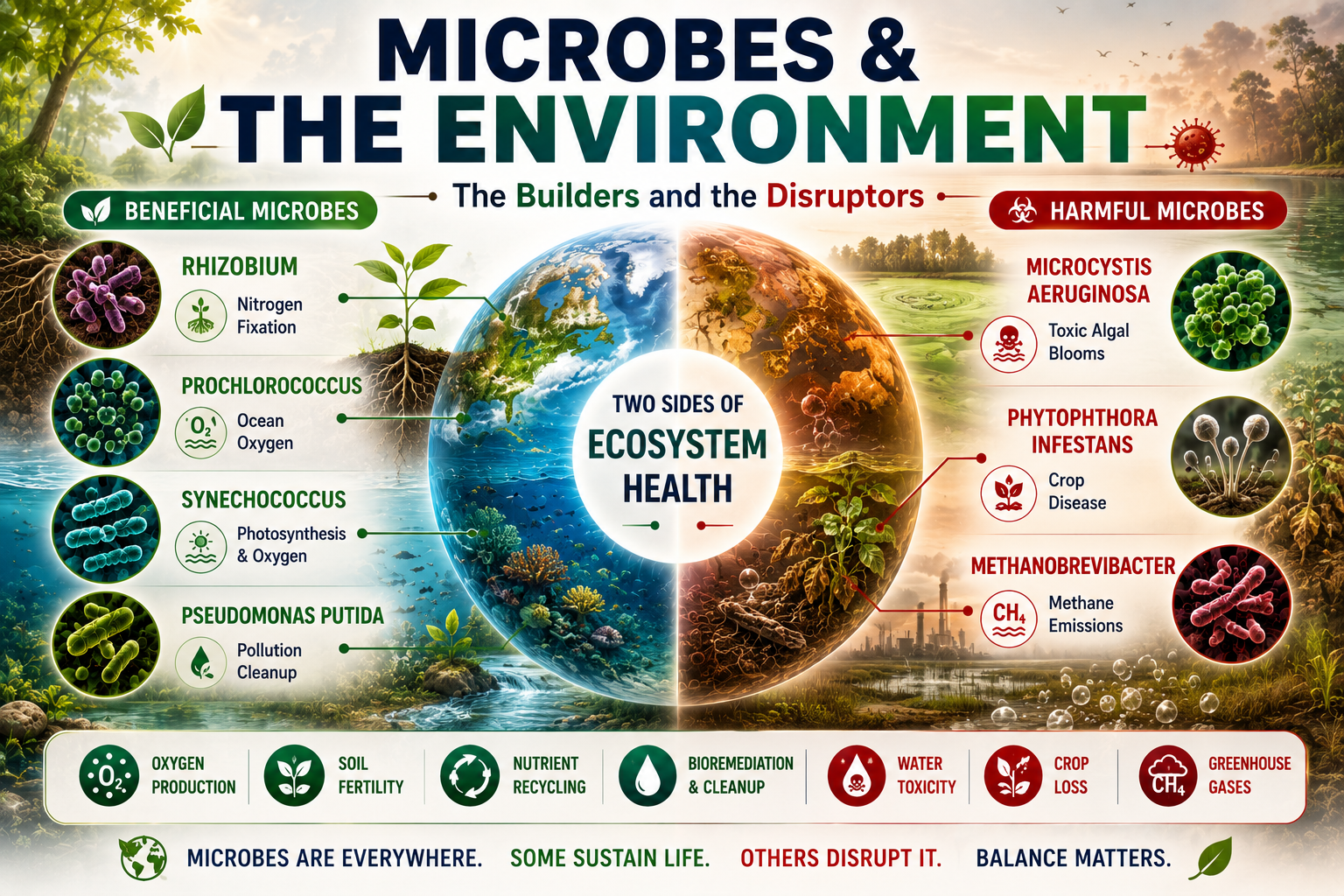
Among the most beneficial microbes are Rhizobium bacteria. They live in partnership with legumes such as peas and beans, converting atmospheric nitrogen into nutrients that plants can use. This naturally enriches soil and reduces the need for chemical fertilizers.
Another important group is the cyanobacteria Prochlorococcus and Synechococcus. These microscopic organisms perform photosynthesis in the oceans and produce a significant portion of the oxygen released into the atmosphere each year.
Decomposer microbes such as Bacillus and Pseudomonas species break down dead plants, animals, and organic waste. Without them, nutrients would remain locked in organic matter and ecosystems would gradually lose fertility.
Some microbes can also help clean the environment. Pseudomonas putida, for example, can degrade certain pollutants and is used in bioremediation projects to help remove contaminants from soil and water.
Not all environmental microbes are beneficial. Certain harmful algal bloom-forming microorganisms, including Microcystis aeruginosa, can produce toxins that contaminate lakes and reservoirs, killing fish and threatening drinking water supplies.
Another example is Phytophthora infestans, a plant pathogen that causes potato late blight. Although not a true fungus, it is a microbe that can devastate crops and disrupt food production.
Some microbial species also contribute to environmental pollution. Methane-producing archaea such as Methanobrevibacter release methane, a powerful greenhouse gas, during the decomposition of organic matter in oxygen-poor environments.
These examples show that microbes are deeply woven into the environment. Some sustain ecosystems by producing oxygen, recycling nutrients, and supporting plant growth, while others can damage ecosystems, crops, and environmental quality under certain conditions.
The smallest organisms on Earth can be both its greatest threats and some of its most essential allies.