A modern wastewater treatment plant is essentially a giant microbial city. Every day, billions of microbes are deliberately cultivated to remove pollutants from industrial wastewater before the water is released back into the environment.
The most widely used approach is called the activated sludge process. Treatment tanks are inoculated with microbial communities containing bacteria, fungi, and protozoa that thrive on the waste present in the water.
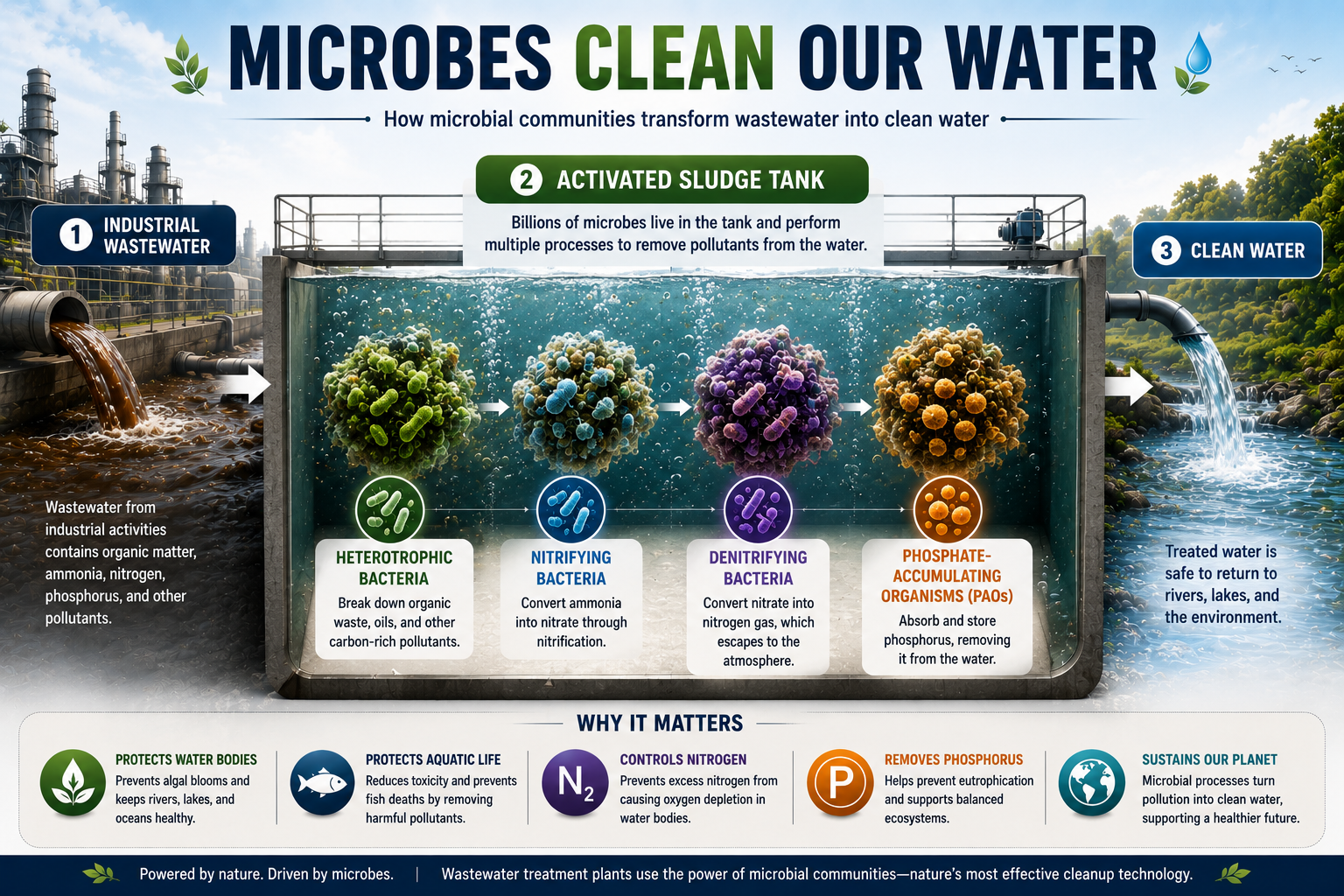
As air is pumped into the tanks, the microbes begin feeding on dissolved organic pollutants. They grow, multiply, and gather into microscopic clusters called flocs. These flocs act like tiny biological cleanup crews, capturing and consuming contaminants as wastewater flows through the system.
The first job is usually performed by heterotrophic bacteria such as Pseudomonas, Bacillus, and Acinetobacter. These microbes break down organic wastes, oils, and other carbon-rich pollutants, converting them into microbial biomass, carbon dioxide, and water.
Wastewater often contains ammonia, which can be toxic to aquatic life. Nitrifying bacteria such as Nitrosomonas and Nitrobacter solve this problem by converting ammonia into nitrate through a process known as nitrification.
But the process does not stop there. Denitrifying bacteria, including species of Paracoccus and Pseudomonas, convert nitrate into nitrogen gas, which escapes harmlessly into the atmosphere. This prevents excess nitrogen from accumulating in rivers, lakes, and coastal waters.
Many treatment systems also encourage the growth of phosphate-accumulating organisms (PAOs) such as Candidatus Accumulibacter. These microbes absorb and store large amounts of phosphorus, helping remove another major pollutant from wastewater.
Without these microbial processes, nutrient-rich wastewater could trigger algal blooms, oxygen depletion, fish deaths, and ecosystem damage. By carefully managing microbial communities, wastewater treatment plants transform polluted industrial effluents into much cleaner water using one of nature's most effective technologies: microbial metabolism.
A wastewater treatment plant is not just an engineering system—it's a carefully managed microbial ecosystem.