Every flush sets off a massive microbial cleanup operation. Without microbes, cities would quickly become overwhelmed by sewage, unpleasant odors, and disease-causing waste.
Sewage is rich in organic matter from human waste, food residues, paper products, and household wastewater. When it reaches a treatment plant, microbes begin breaking down this material almost immediately.
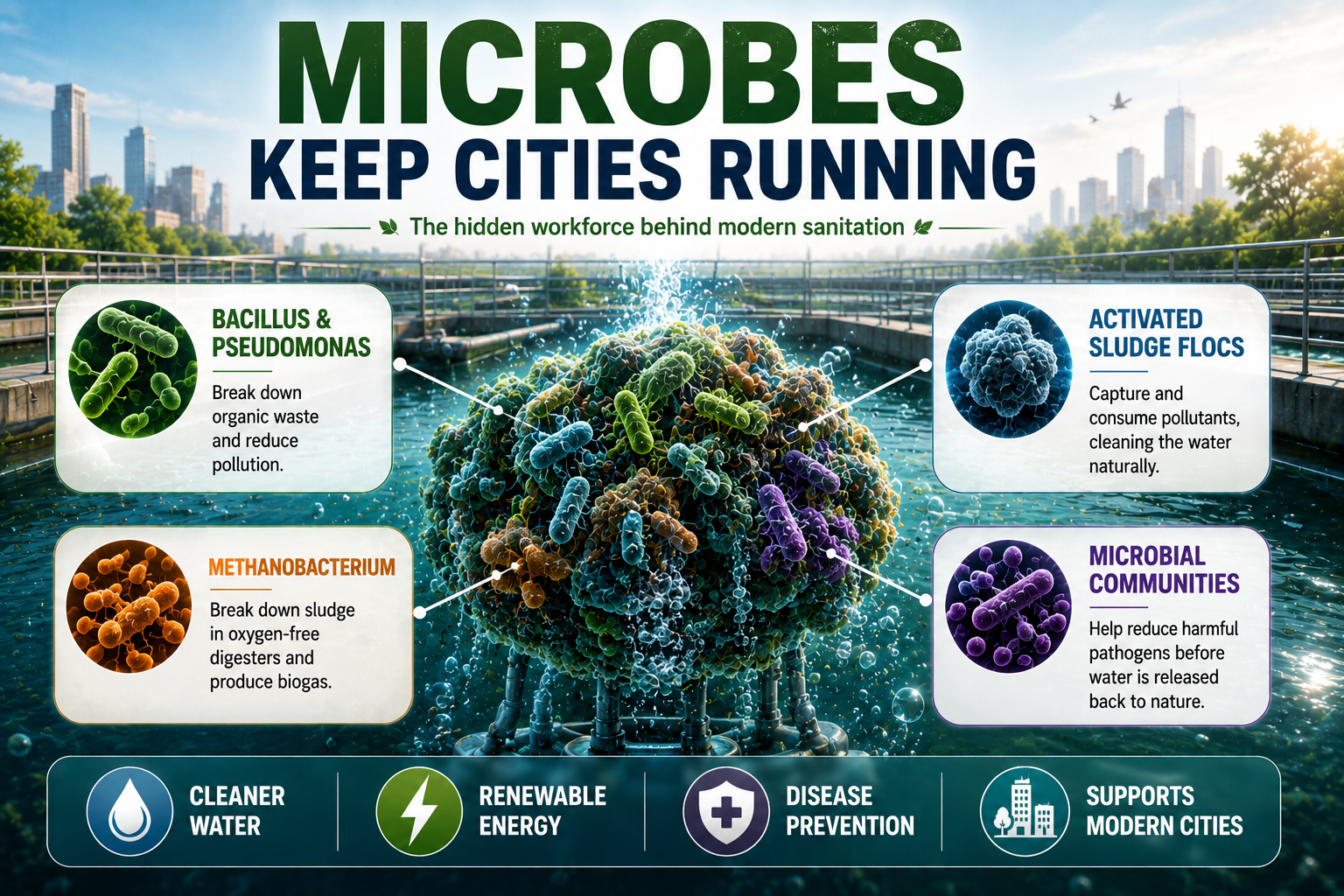
Bacteria such as Bacillus, Pseudomonas, and Acinetobacter consume much of the organic waste as a food source. As they grow, they reduce pollution and transform sewage into simpler, less harmful substances.
One of the biggest challenges is dealing with sewage sludge, the solid material that remains after treatment. Here, anaerobic microbes take over. In oxygen-free digesters, organisms such as Methanobacterium and Methanosaeta break down complex organic matter and produce methane-rich biogas.
This process dramatically reduces the volume of sludge while generating renewable energy that can help power the treatment facility itself.
Microbes also help reduce pathogen levels during sewage treatment. Diverse microbial communities in activated sludge systems contribute to the removal of organisms such as Escherichia coli, Salmonella, and other fecal bacteria before final disinfection.
Combined with chlorination, ultraviolet treatment, or similar processes, this microbial activity improves the safety of treated water.
Modern sewage remediation is therefore much more than waste disposal. It is a biological recycling system in which microbial communities convert human waste into cleaner water, stabilized solids, and even useful energy.
Every day, these invisible organisms process billions of liters of sewage, making modern sanitation possible and preventing countless waterborne diseases.
Before water returns safely to rivers and oceans, it passes through one of Earth's largest microbial factories.